By Chirag Patil · · 4 min read
Architecting a Retention & Growth Platform Backend
This blog post details the architectural decisions and philosophies behind building a robust backend system for a retention and growth platform startup, focusing on FastAPI, PostgreSQL, and a modular design.
As a founding engineer at a budding startup, the early days were a whirlwind of excitement, ambition, and a healthy dose of "let's build something amazing from scratch." My mission? To design and implement the entire backend system for a cutting-edge retention and growth platform. It was a blank canvas, a chance to lay down the architectural foundations that would support the company's vision of deeply engaging users and fostering lasting loyalty.
The challenge was clear: how do you build a system that not only handles user data securely and efficiently but also powers dynamic features like personalized rewards, in-app currencies, and location-based interactions, all while being scalable enough to grow with a rapidly expanding user base? This wasn't just about writing code; it was about crafting the digital nervous system of a business, enabling them to understand, delight, and retain their customers.
My vision for this API and backend was simple yet ambitious: it had to be robust, highly scalable, modular, and inherently secure. We needed a system that could evolve quickly without crumbling under its own weight. Given the need for rapid iteration and a strong, type-hinted foundation, Python with FastAPI emerged as the clear choice for our API layer, backed by a reliable PostgreSQL database for our data persistence.
The architecture I settled on was a layered, domain-driven approach, which you can see reflected in the project's structure:
api/: This is our public face, housing the FastAPI endpoints. Each file here (auth.py, cafes.py, karats.py, profile.py, rewards.py) corresponds to a specific domain, ensuring a clean separation of concerns for our external interactions.services/: The heart of our business logic. Files like auth_service.py, customer_service.py, karats_service.py, profile_service.py, and rewards_service.py encapsulate the "how" of our operations. This layer orchestrates complex workflows, applies business rules, and ensures data integrity.repositories/: Our data access layer. cafes_repository.py, karats_repository.py, profile_repository.py, rewards_repository.py, and sales_repository.py are responsible for interacting directly with the database. They abstract away the complexities of SQL queries or ORM operations, providing a clean interface for the services layer. This separation means we could, in theory, swap out our database technology without impacting the business logic.models/: This directory defines our data structures, both for the database (ORM models) and for API request/response schemas (Pydantic models). schemas.py is particularly crucial here, ensuring data consistency and validation across the system.core/: The foundational elements of our application. config.py manages environment variables and settings, database.py handles our database connection, and dependencies.py sets up FastAPI's dependency injection, making our code testable and modular.utils/: A home for shared utility functions, like phone_utils.py, which might handle phone number formatting or validation.
This modularity wasn't just an academic exercise; it was a practical necessity. It allowed different team members to work on distinct features simultaneously without stepping on each other's toes. It made testing a breeze, as we could mock out dependencies and isolate units of code. And most importantly, it provided the flexibility to scale individual components as our needs grew.
We built out critical features, each designed to drive retention and growth:
-
Secure Authentication: The auth module ensures users can securely sign up, log in, and manage their sessions, forming the gateway to our platform.
-
Rich User Profiles: The profile system allows users to manage their information, and for the platform to store and retrieve data essential for personalization.
-
Engaging Rewards System: This was a big one. The rewards module enables the creation, distribution, and redemption of various incentives, directly encouraging desired user behaviors.
-
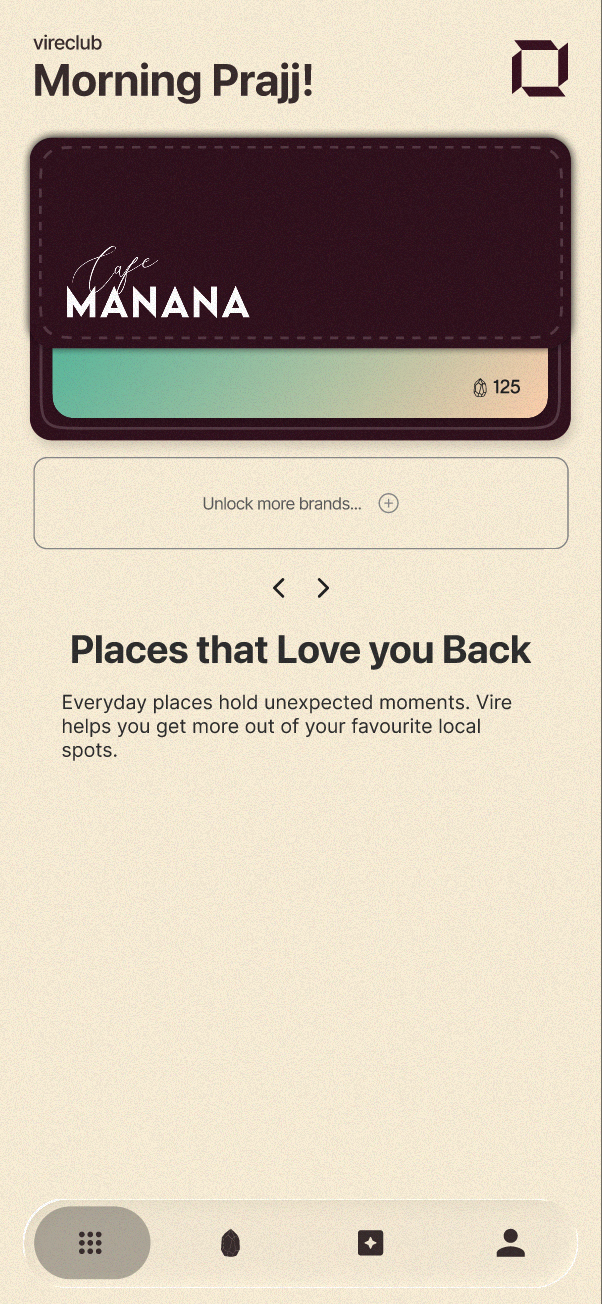
Dynamic Karats (In-App Currency): Our karats system provides a flexible in-app currency, allowing for gamification and a deeper level of engagement within the platform.

A page showing how users can redeem karats -
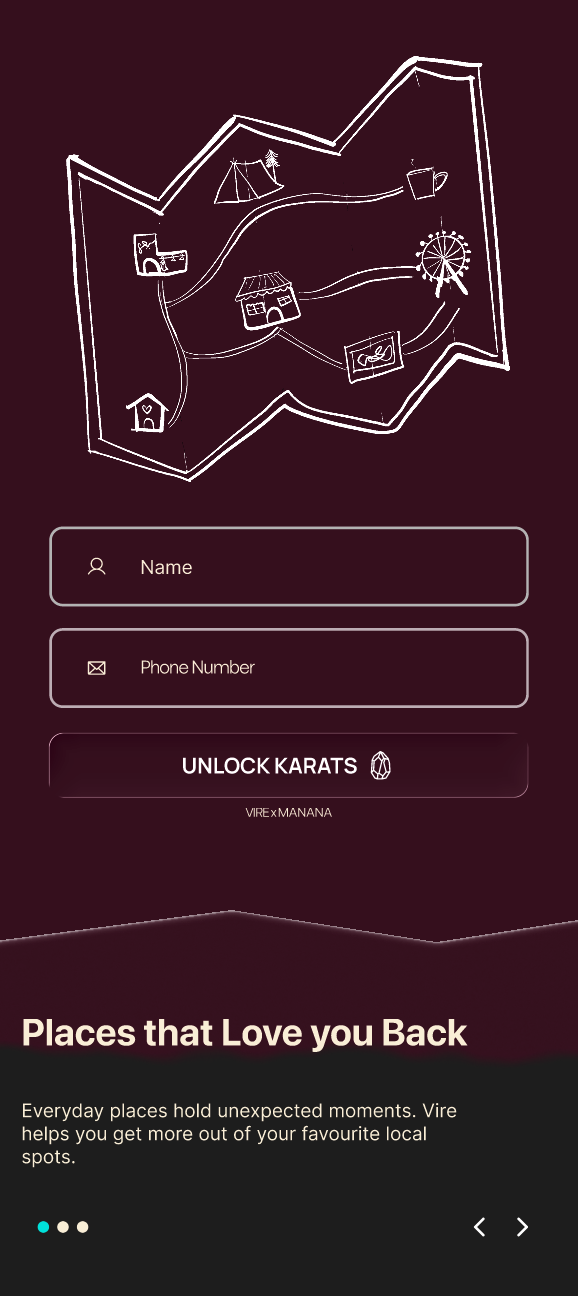
Location-Based Services: The cafes module supports features tied to physical locations, opening up possibilities for real-world engagement and loyalty programs.
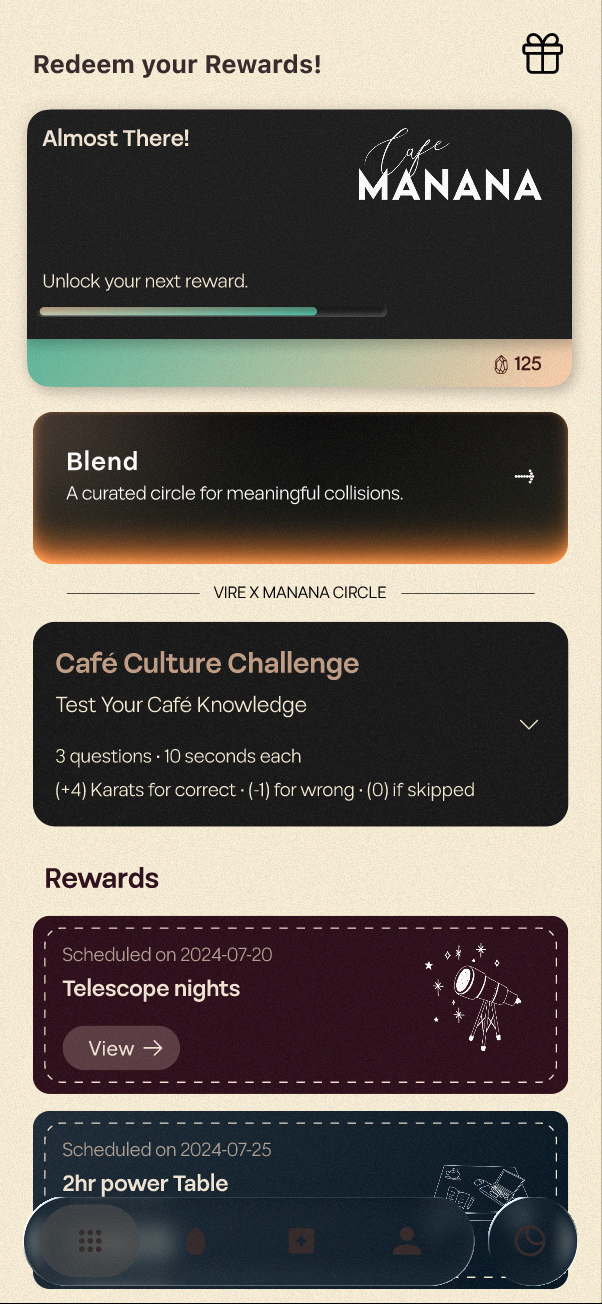
A page showing details of a cafe -
Sales Tracking: The sales_repository ensures we can track transactions, providing crucial data for analytics and understanding user spending patterns.
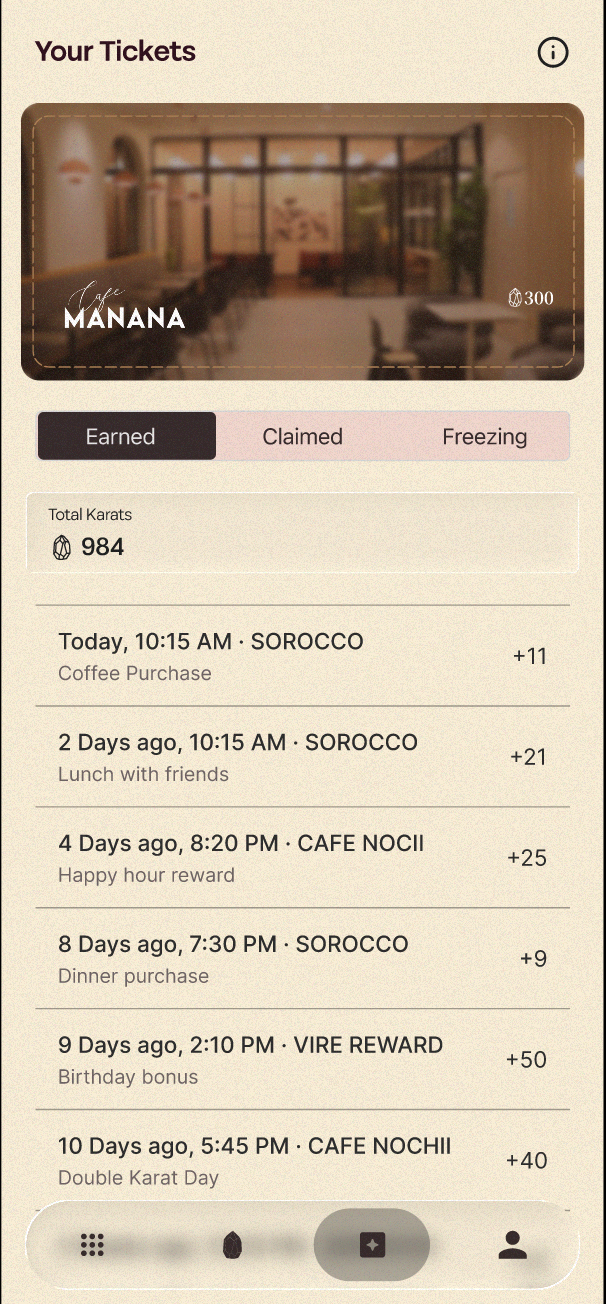
A ledger page showing transactions -
Secure Authentication: The auth module ensures users can securely sign up, log in, and manage their sessions, forming the gateway to our platform.
-
Rich User Profiles: The profile system allows users to manage their Looking back, the journey of building this backend from the ground up was incredibly rewarding. It reinforced the importance of a strong architectural foundation, especially in a fast-paced startup environment where requirements can shift rapidly. It taught me the delicate balance between shipping features quickly and ensuring the underlying code is clean, maintainable, and scalable.
Ultimately, this backend isn't just a collection of APIs and databases; it's the engine that powers a startup's ability to connect with its users on a deeper level. It's what allows them to offer that perfectly timed reward, understand a user's preferences, and build a community around their brand. Seeing the platform come to life, knowing that every line of code contributes to fostering genuine user loyalty and driving sustainable growth, is truly what makes being a founding engineer so fulfilling.